Preparing a Sub-Base Before You Compact
Clearing, shaping, layering and moisture: the practical steps that make compaction work and keep a finished surface from cracking or sinking.
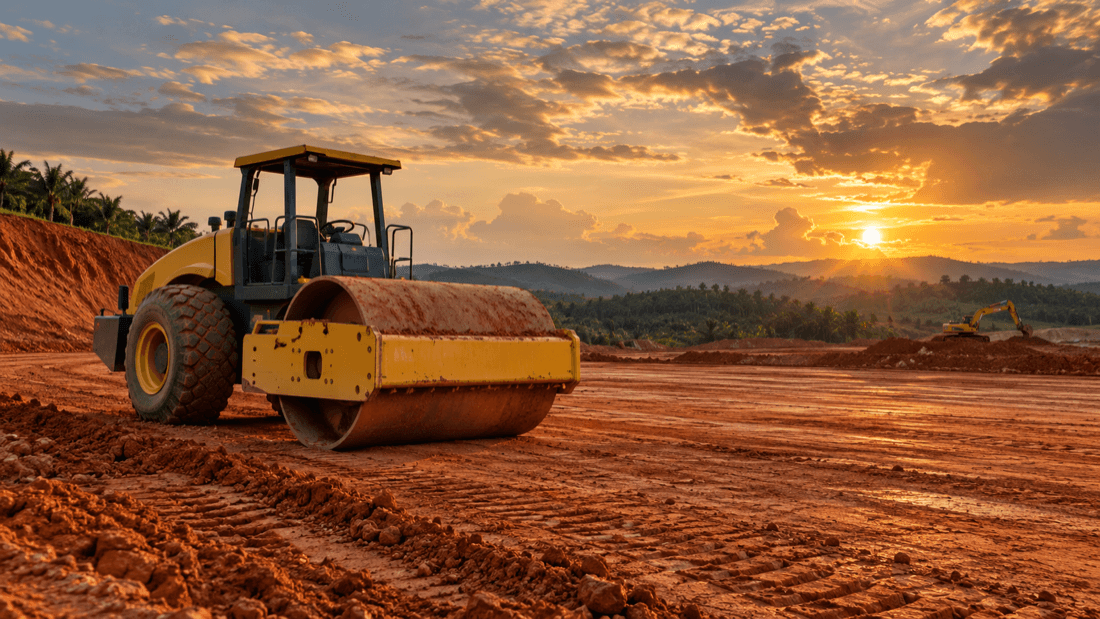
A compactor can only press down what is already there. If the sub-base underneath is soft, uneven or wet, no amount of rolling will give you a surface that lasts. Cracks, dips and puddles on a finished driveway or road often trace back to a sub-base that was rushed.
This guide covers the practical steps before the compactor arrives: clearing, shaping, laying the material in layers and getting the moisture right. It is general site practice, explained in plain terms.
Clear and inspect the ground
Remove what should not be there
Strip away topsoil, roots, grass, rubbish and any soft organic material. These break down over time and leave voids under the surface. Old broken concrete or loose bricks should also come out unless they are meant to stay as part of the fill.
Find the soft spots
Walk the cleared area and look for places that sink underfoot, stay wet after rain or feel springy. Soft spots usually need to be dug out and replaced with better material before anything is laid on top.
- Pockets of clay that hold water.
- Old trench lines that were backfilled loosely.
- Low areas where rainwater collects.
Check drainage
Water is the main enemy of a sub-base. Make sure the finished level will shed water away from buildings and toward a drain. If water already pools on the site, plan for it now rather than after the surface is laid.
Shape the formation level
Set out levels and falls
The formation level is the prepared ground that the sub-base sits on. Mark the finished levels with pegs and string lines, then shape the ground so the sub-base will have an even thickness and the right fall for drainage.
Compact the formation itself
Before laying new material, run the compactor over the exposed ground. This firms up the formation and shows up any remaining soft areas. A plate compactor suits small formations such as a porch or path; a roller suits larger areas.
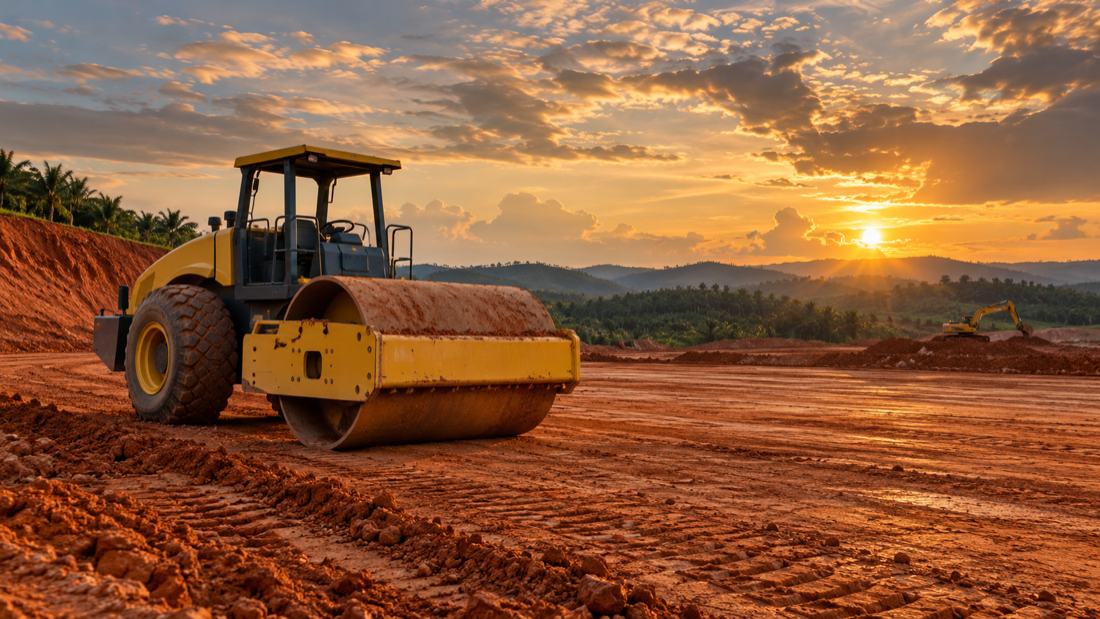
Lay the sub-base in layers
Choose the material
Crusher run is a common sub-base material on Malaysian sites because the mix of sizes locks together well when compacted. Sand is used for bedding layers under pavers. Tell us which material you are using when you ask for a quotation, as it affects which machine suits.
Spread in thin, even layers
The most common mistake is dumping the full depth of material in one go and rolling the top. The compactor only reaches so far down, so the bottom stays loose. Spread the material in thin, even layers and compact each one before adding the next. The right layer thickness depends on the material and the machine; follow the job specification where there is one.
Overlap your passes
Work in straight lines and overlap each pass a little with the previous one, so no strip is missed. Start at the edges and work toward the middle on open areas, and finish with a few passes in the other direction.
Get the moisture right
Material that is bone dry does not pack well, and material that is soaked turns to mud and pumps under the machine. Aim for damp: it should hold together when squeezed in your hand but not drip. In dry weather, lightly water the layer; after heavy rain, give it time to drain.
Edges, corners and final checks
Do not forget the edges
Edges along walls, kerbs and drains are where sub-bases fail first. A roller cannot always get close, so use a plate compactor to finish these strips properly.
Check before the surface goes on
- Walk the area: it should feel firm everywhere, with no movement underfoot.
- Check levels against your string lines and correct any low spots with more material, then compact again.
- Look for loose stones on the surface and roll them in.
Machines for sub-base work
Rates
Our published rates are for the machine:
- Plate Compactor: RM400 per 1 week, RM1,000 per 1 month.
- Roller Compactor (1 Ton): RM600 per 1 week, RM1,400 per 1 month.
- Roller Compactor (3 Ton): RM1,800 per 1 week, RM5,000 per 1 month.
See all machines in our compactor rental fleet. For large earthworks, 5-ton, 10-ton and 25-ton rollers are available to ask about, priced in the quotation.
Delivery and quotation
The machine is delivered to site and collected after; transport is charged by location. A deposit is paid before delivery, and an operator can be arranged on request depending on the package. We take enquiries across Peninsular Malaysia, such as roller compactor rental in Kajang, roller compactor rental in Klang and roller compactor rental in Sungai Petani.
Send the site town, start date and period, material, area and access, and whether you need an operator. Availability and transport are confirmed on WhatsApp.